

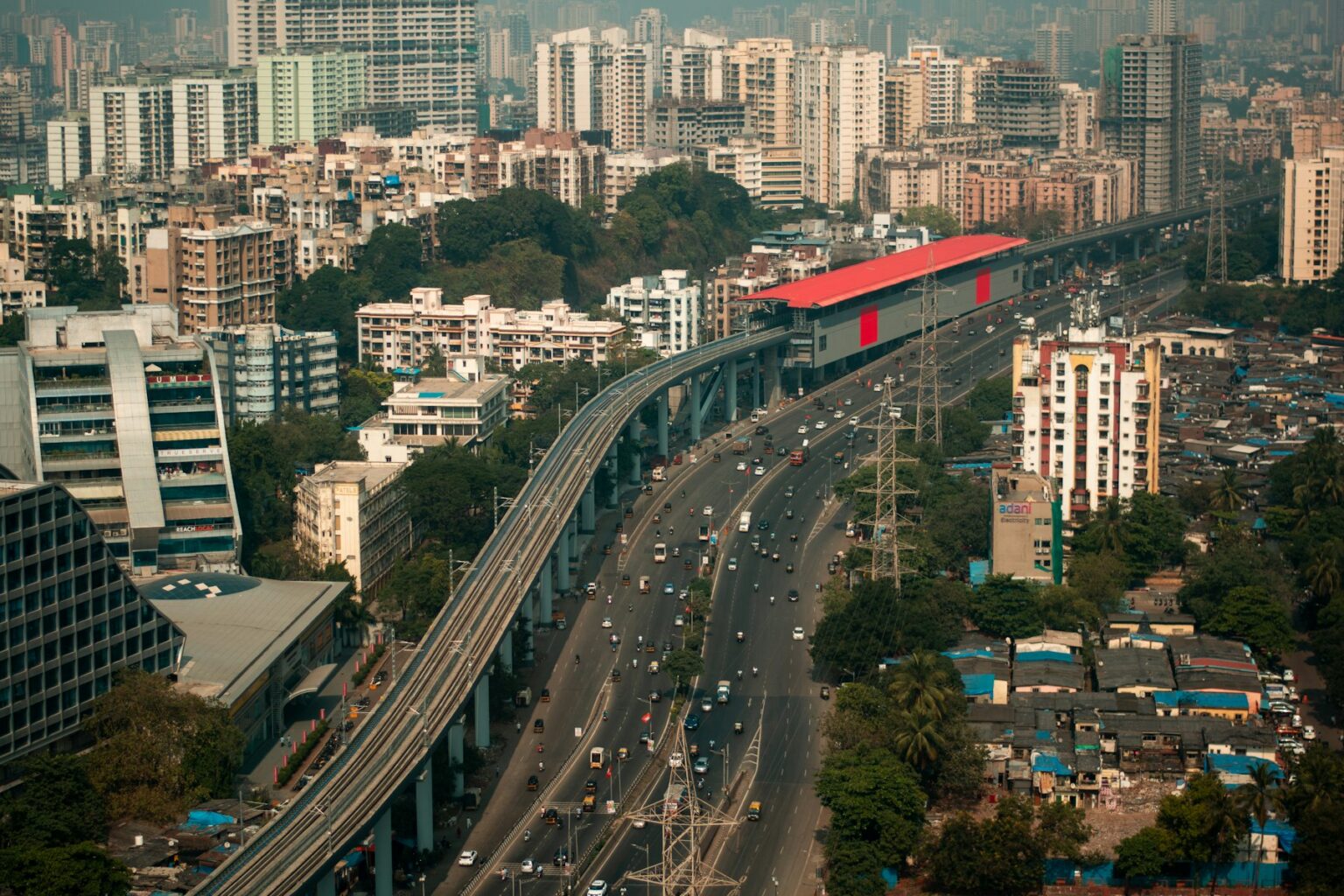
Upcoming metro projects in India: the pipeline, the lenders and how contracts are won
India has one of the world’s largest metro networks, at more than 1,185 km, with about 1,000 km more under construction. Behind the new lines is a steady flow of contracts for civil works, tunnelling, rolling stock, signalling and systems, much of it financed by Japanese, European and Asian lenders. This guide maps the pipeline city by city and explains how foreign suppliers win work.
By UBR Infra · Updated 28 October 2026 · 44 sources
The scale of India’s metro build-out
In October 2026 the urban affairs ministry put India’s metro network at more than 1,185 km across over 26 cities, up from 248 km in five cities before 2014, with about 1,000 km under construction and about 1.5 crore passengers a day.[1] The central budget for metro and mass rapid transit in 2026-27 is ₹28,740 crore, with a further ₹2,200 crore for the regional rapid transit system (RRTS) run by NCRTC.[2]
Central budget figures understate the market. Most of the money comes from state governments and from loans by multilateral and bilateral lenders such as JICA, ADB, AIIB, EIB, KfW and AFD, passed through to the state metro companies.
How metro projects get approved and funded
The Metro Rail Policy 2017 sets the rules for central support.[3] A state applying for central help must:
- include private participation, either for the whole project or for parts such as operation and maintenance or fare collection;
- choose one of three funding routes: a PPP with viability gap funding, a central grant of 10% of project cost, or 50:50 equity sharing between centre and state;
- show that metro is the right mode compared with bus rapid transit or light rail, and achieve an economic return of at least 14%;
- adopt transit-oriented development and value capture financing, plan last-mile links within 5 km of stations, and set up a unified metropolitan transport authority.
The policy is being applied. In November 2025 the ministry returned the Coimbatore and Madurai project reports because neither city met the population threshold, suggesting bus rapid transit instead,[4] and in April 2026 Odisha scrapped Bhubaneswar’s ₹6,225 crore first phase, citing low expected ridership and non-compliance with the policy.[5]
Mumbai: the biggest single programme
Mumbai has more metro lines in construction than any other Indian city, built by MMRDA and, for the underground lines, Mumbai Metro Rail Corporation (MMRCL).
| Line | Length | Status | Contracts and finance |
|---|---|---|---|
| Line 3 (Aqua), underground | 33.5 km | Fully open October 2025 | Cost ₹37,276 crore; operated by DMRC for 10 years[6] |
| Line 4/4A | 32.3 + 2.9 km | First section targeted for late 2026 | L&T with Alstom lowest bidder for 234 cars, CBTC signalling and platform screen doors[7] |
| Line 5 | About 25 km | Under construction | Titagarh lowest bidder for 132 cars and CBTC; AIIB financing proposed[8] |
| Lines 10 and 12 | 9.2 and 22.2 km | Approved / under construction | MMRDA sought ₹14,100 crore of rupee term loans in 2026[9] |
| Line 11, underground | 17.4 km, extended in 2026 | Pre-construction | JICA loan of ₹5,500 crore signed March 2026[10] |
The pipeline in other cities
| Project | Size and cost | Status | Contracts and finance |
|---|---|---|---|
| Delhi Phase 4 priority corridors | 61.7 km, ₹24,949 crore | Ring line completed March 2026; staged completion | Alstom for 312 cars and signalling; civil works by Afcons, L&T and others[11] |
| Delhi Phase V(A) | 16.1 km, ₹12,015 crore | Approved December 2025 | Funded by the centre, Delhi government and international agencies[12] |
| Chennai Phase 2 | About 116 km, ₹63,246 crore | Poonamallee–Vadapalani section opened October 2026[13] | ₹33,594 crore from multilateral lenders including JICA, AIIB and ADB;[14] Hitachi driverless signalling;[15] BEML and Alstom trains[16] |
| Bengaluru Phase 2/2A/2B | Pink and Blue lines | Under construction; airport line targeted 2027 | BEML for 318 cars, beating Alstom, Titagarh and CAF;[17] Siemens driverless signalling on the Yellow Line[18] |
| Bengaluru Phase 3 | 44.7 km, ₹15,611 crore | Approved August 2024 | ₹7,577 crore of external debt[19] |
| Pune Line 3 (Hinjewadi) | 23.3 km, ₹8,313 crore | First phase awaiting approvals | PPP: 35-year design-build-finance-operate-transfer concession with 20% viability gap funding, held by Tata and Siemens; Alstom trains[20] |
| Nagpur Phase 2 | 43.8 km, ₹6,708 crore | Under construction | ADB and EIB financing;[21] Siemens signalling and telecoms worth ₹773 crore[22] |
| Surat | Over 40 km, ₹12,020 crore | First section targeted late 2026 | KfW and AFD loans[23] |
| Bhopal and Indore | Bhopal 31.5 km | Bhopal priority section opened December 2025 | Alstom trains and signalling worth €387 million, built in Gujarat[24] |
| Agra and Kanpur | Agra 29.4 km | Partly open | EIB loan of €450 million for Agra; Alstom trains and signalling[25] |
| Kochi Phase 2 | 11.2 km | Under construction | AIIB loan of US$122 million; Afcons civil works[26] |
| Hyderabad Phase 2A | 76.4 km, ₹24,269 crore | State sanction; central approval pending | 48% debt from JICA, ADB or NDB[27] |
| Lucknow Phase 1B | 11.2 km, ₹5,801 crore | Approved August 2025 | Seven underground stations[28] |
| Visakhapatnam Phase 1 | 46.2 km, about ₹6,250 crore | International EPC tender issued July 2025 | 50:50 centre–state plus loans[29] |
Regional rapid transit: Namo Bharat
The 82 km Delhi–Meerut RRTS, India’s first regional rapid transit line, was completed and inaugurated in February 2026, with Alstom trains and ETCS Level 2 signalling over LTE.[30] The next two corridors, Delhi–Gurugram–Bawal (about 93 km) and Delhi–Panipat–Karnal (about 136 km), together worth about ₹65,000 crore, were cleared by the Public Investment Board and were awaiting Cabinet approval in October 2026.[31] When approved, they will bring another round of civil, systems and rolling stock contracts.
Make in India rules for metro suppliers
Local content rules shape almost every metro equipment contract:
- Rolling stock. Since 2018, at least 75% of the cars in a tender must be made in India.[32]
- Minimum local content. The ministry’s 2019 plan set minimums of 50% for rolling stock, 50% for signalling (from 2023), 50% for telecoms and electrical systems, and 80% for civil works.[33]
- Land-border countries. Since July 2020, bidders from countries sharing a land border with India must register with DPIIT and obtain security clearance before bidding for public projects, including metros,[34] which has effectively shut Chinese rolling stock makers out of recent tenders.
The result is that the foreign companies winning Indian metro work have Indian factories. Alstom’s Bhopal trains and signalling, for example, were built at its Savli plant in Gujarat;[24] Herrenknecht supplies tunnel boring machines, some from its Tamil Nadu plant, to contractors such as L&T.[35] The 2026-27 Budget also announced a scheme to boost domestic manufacturing of construction equipment, including tunnel boring machines.[2]
Who wins what
| Package | Recent winners |
|---|---|
| Rolling stock | Alstom (Delhi, Bhopal, Agra, Pune Line 3); BEML (Bengaluru, Chennai); Titagarh (Mumbai Line 5)[11][17][8][20] |
| Signalling | Alstom, Siemens and Hitachi, which acquired Thales’s signalling business in 2024[11][18][36] |
| Tunnelling and civil | L&T, Afcons, Tata Projects, ITD Cementation and others[16][11] |
| Operation and maintenance | DMRC for Mumbai Line 3 and Chennai Phase 2[6][16] |
Domestic capability is growing: DMRC and Bharat Electronics agreed in 2023 to develop indigenous train control, after DMRC deployed its own automatic train supervision system on the Red Line.[37] For foreign suppliers the strongest positions are in specialist systems, components and subsystems that Indian integrators still import, and in partnerships with Indian manufacturers.
Lender rules: who is allowed to bid
| Lender | Procurement rule |
|---|---|
| JICA (STEP loans) | The main contractor must be a Japanese company or a Japanese-led joint venture, and at least 30% of the contract price must be Japanese goods and services; subcontracts are open[38] |
| JICA (general untied loans) | Open international bidding; check each loan agreement |
| AIIB | Open to suppliers from all countries[39] |
| ADB | Goods, works and services must come from ADB member countries[40] |
| EIB | Open to firms from all countries; notices published in the EU Official Journal and on the EIB website[41] |
Knowing which lender finances which package tells you whether you can bid and who your competitors will be. A European firm, for example, may be best placed on EIB- or KfW-funded lines, while Japanese suppliers have an advantage on STEP-funded packages.
The risk: ridership and finances
Indian metros often carry far fewer passengers than forecast. An IIT-Delhi study found metros typically reaching 25–35% of projected ridership, with Delhi at about 47%, though DMRC disputes the figure.[42] A CAG audit of Bengaluru’s first phase found a 126% cost overrun, ridership of 5.89 lakh a day against 19.49 lakh projected, and fare revenue at 22.7% of projection.[43]
Low ridership broke India’s largest metro PPP. Hyderabad Phase 1 lost money for years, and in 2026 Telangana took over L&T’s 90% stake for ₹1,461 crore and assumed about ₹13,538 crore of debt.[44] For contractors and suppliers paid by public metro companies, ridership risk sits with the state. For anyone taking equity or demand risk in a metro PPP, it is the central question.
How foreign suppliers win metro work
- Follow the lender
Track which lender finances each line and package, and whether its rules let you bid.
- Localise early
Local content minimums of 50% or more mean you need an Indian manufacturing, assembly or sourcing base before the tender, not after.[33]
- Team with an integrator
Large packages go to consortia; a subsystem supplier usually wins by joining the bid of an Indian contractor or a global integrator.
- Get approved
Metro companies keep approved-vendor lists and require type approvals and references; start well before the tenders you want.
Our urban transport team tracks the pipeline, and our partner search service finds the Indian manufacturing or consortium partner that local content rules require.
Frequently asked questions
How many km of metro does India have?
More than 1,185 km in over 26 cities as of October 2026, according to the urban affairs ministry, with about 1,000 km under construction.
Which are the biggest upcoming metro projects in India?
Chennai Phase 2 (about 116 km, ₹63,246 crore), Mumbai’s remaining lines including Lines 4, 5, 11 and 12, Delhi Phase 4 and V(A), Bengaluru Phases 2 and 3, Hyderabad Phase 2A, and the Delhi–Gurugram and Delhi–Karnal Namo Bharat corridors awaiting approval.
Who finances metro projects in India?
The centre and states through equity, grants and loans, together with lenders such as JICA, ADB, AIIB, EIB, KfW, AFD and NDB. Each lender has its own procurement rules.
Can foreign companies supply Indian metro projects?
Yes, and many do, including Alstom, Siemens and Hitachi. But local content rules require at least 75% of rolling stock to be made in India and set minimums of around 50% for signalling, telecoms and electrical systems, so suppliers usually need Indian manufacturing or an Indian partner.
What is the Metro Rail Policy 2017?
The central policy for funding new metros. It requires private participation, a 14% economic return, transit-oriented development and value capture, and offers three funding routes: PPP with viability gap funding, a 10% central grant, or 50:50 equity sharing.
Related
Sources
- Swarajya, India's metro network will soon cross 2,000 km, says MoS Tokhan Sahu, October 2026
- Indian Infrastructure, Union Budget 2026-27 highlights for infrastructure, February 2026
- The Metro Rail Guy, Metro Rail Policy 2017 (PIB release and document)
- Swarajya, Centre turns down Coimbatore and Madurai metro plans, November 2025
- Swarajya, Odisha scraps Bhubaneswar metro project over low ridership, April 2026
- Free Press Journal, Mumbai Metro Line 3 fully operational, October 2025
- The Metro Rail Guy, L&T and Alstom win Mumbai Metro Line 4 rolling stock and signalling, February 2025
- The Metro Rail Guy, Titagarh wins Mumbai Metro Line 5 coach and signalling contract, June 2025
- Metro Rail Today, MMRDA seeks ₹14,100 crore loan for two Mumbai metro corridors, 2026
- Free Press Journal, JICA to lend ₹5,500 crore for Mumbai Metro Line 11, March 2026
- The Metro Rail Guy, Delhi Metro Phase 4 information
- PM India, Cabinet approves three new corridors in Delhi Metro Phase V(A), December 2025
- Swarajya, Poonamallee–Vadapalani stretch of Chennai Metro opens, October 2026
- The Metro Rail Guy, Chennai Metro Phase 2 approved by central government, October 2024
- Hitachi Rail, wins bid for autonomous signalling for Chennai Metro
- The Metro Rail Guy, Chennai Metro Phase 2 information
- The Metro Rail Guy, BEML awarded Bangalore Metro's 318-coach contract, August 2023
- Railway Gazette, Bengaluru metro orders CBTC for GoA4 driverless operation
- The Metro Rail Guy, Bangalore Metro Phase 3 approved, August 2024
- The Metro Rail Guy, Pune Metro Line 3 information
- The Metro Rail Guy, Nagpur Metro Phase 2 information
- The Hitavada, Siemens receives orders worth ₹773 crore for Nagpur Metro Phase II, July 2025
- KfW, press release on Surat metro financing
- Alstom, metro trains and signalling commence operations in Bhopal, December 2025
- The Metro Rail Guy, Agra Metro information
- The Metro Rail Guy, Kochi Metro Phase 2 information
- The South First, Hyderabad Metro Phase II gets administrative sanction, November 2024
- PM India, Cabinet approves Lucknow Metro Phase 1B, August 2025
- Metro Rail Today, first global tender launched for Visakhapatnam Metro, July 2025
- Railway Gazette, Modi inaugurates completed Delhi–Meerut RRTS, February 2026
- Swarajya, NCRTC expects approval soon for Delhi–Panipat–Karnal and Delhi–Gurugram–Behror corridors, October 2026
- MoHUA, mandatory conditions for indigenisation and Make in India in metro rail, April 2018
- MoHUA, Make in India and standardisation in metro rail and RRTS, November 2019
- The Metro Rail Guy, government amends bidding policy for public projects including metro rail, July 2020
- The Metro Rail Guy, L&T's first Chennai Metro Phase 2 TBM starts tunnelling, February 2023
- Hitachi, completion of acquisition of Thales Ground Transportation Systems, May 2024
- ThePrint, DMRC and BEL to develop indigenous CBTC, September 2023
- JICA, operational rules for STEP (Special Terms for Economic Partnership), December 2018
- Government of Canada Trade Commissioner Service, Asian Infrastructure Investment Bank procurement
- ADB, procurement policy, 2017
- EIB, guide to procurement for projects financed by the EIB, March 2024
- ThePrint, metros have less than 50% of projected ridership, says IIT-D report, January 2024
- Policy Edge, CAG flags 126% Phase 1 cost increase and ridership gap in Bengaluru metro, August 2026
- The Week, why L&T had to hand over Hyderabad Metro to Telangana, April 2026
Talk to a partner about India
Tell us what you make or build and where you want to be in India. A partner reads every enquiry and replies within one working day.
By submitting, you agree that we may use these details to reply to you, as set out in our privacy policy. We do not sell your details or add you to mailing lists without asking.