

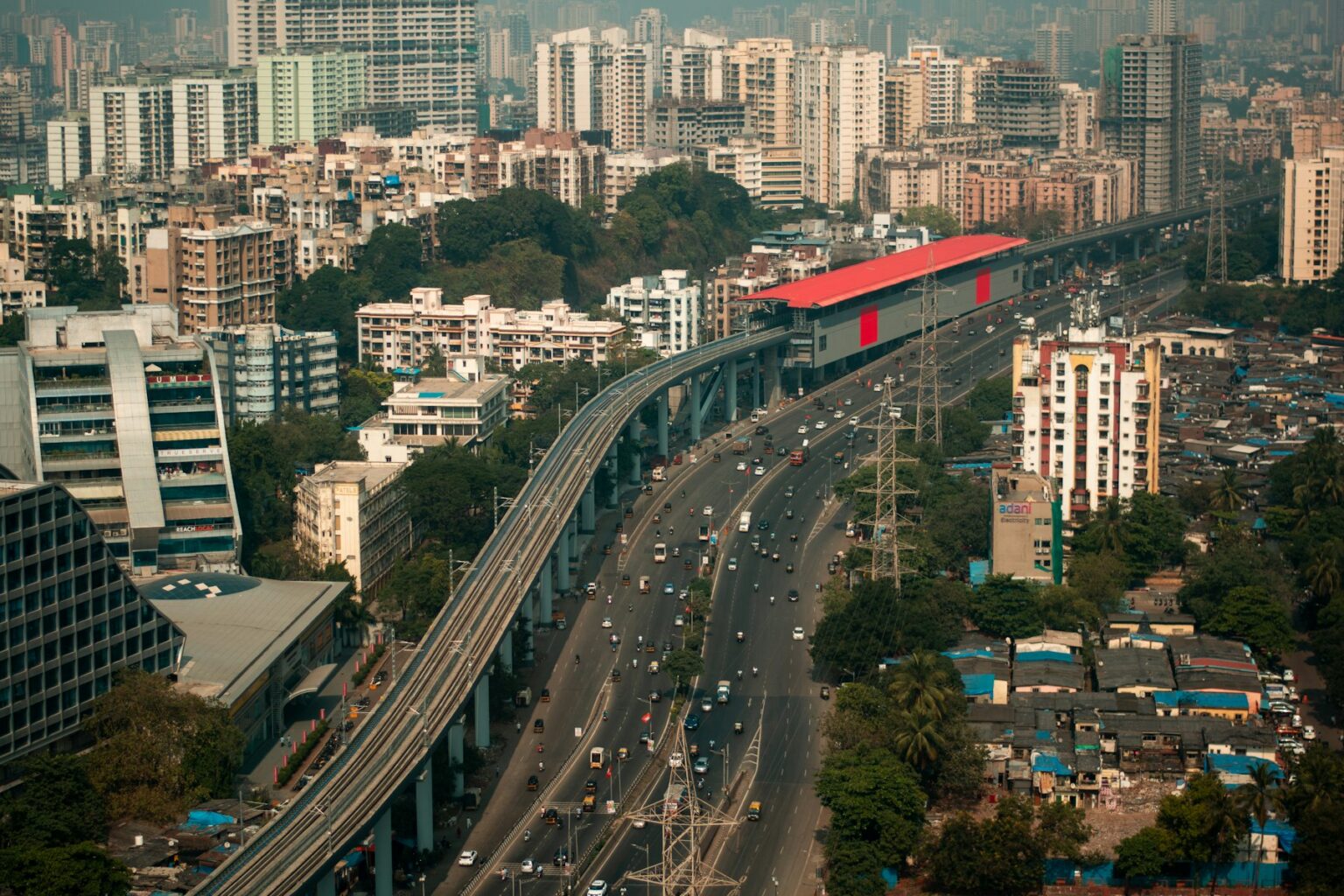
Metro, rail and urban transport in India
India now runs one of the world’s largest metro networks and is building nearly as much again. Most large lines are part-funded by Japanese, European and multilateral lenders, whose tenders are open to international bidders. For signalling, rolling-stock, tunnelling, systems and operating companies, the opportunity is large, but the rules on local manufacturing and joint bidding decide who wins.
Talk to a partner- 1,185 kmmetro operational in 26 cities, up from 248 km in 201423 Oct 2026 · en.channeliam.com
- ~998 kmmetro under construction23 Oct 2026 · en.channeliam.com
- ₹30,942 crcentral metro budget for FY2026-27Jul 2026 · metrorailtoday.com
- 10,000electric buses sanctioned under PM e-Bus SewaMar 2026 · heavyindustries.gov.in
Where the money is going
Metro rail
Lines are under construction in Mumbai, Chennai (Phase 2: 118.9 km, ₹63,246 crore), Bengaluru, Pune, Surat, Ahmedabad, Delhi and more. Under the Metro Rail Policy 2017, new projects need a public-private partnership element to qualify for central support, which opens operations, fare collection and full-system concessions to private players.
Sources: thesouthfirst.com, businesstoday.in
High-speed and regional rail
The 508 km Mumbai–Ahmedabad high-speed line is funded largely by Japanese loans, and the 82 km Delhi–Meerut Namo Bharat regional line opened in full in February 2026 with ADB, AIIB and NDB funding.
Sources: english.punjabkesari.com, railwaygazette.com
Electric buses
PM e-Bus Sewa and PM E-DRIVE fund tens of thousands of electric buses on 12-year gross-cost contracts, where operators are paid per kilometre through escrow, backed by a ₹3,435 crore payment security mechanism.
Sources: mohua.gov.in, evreporter.com
Lender money
JICA’s metro lending in India exceeds ¥1.6 trillion; ADB, AIIB, EIB, KfW and AFD fund lines in Chennai, Bengaluru, Mumbai, Surat, Pune, Nagpur and Kanpur. Lender-funded packages follow the lender’s procurement rules.
Sources: metrorailtoday.com, eib.org, kfw.de
The rules foreign firms must meet
These decide whether you can bid at all, and in what role. Check each tender’s own terms before committing.
- Metro and regional rail tenders set minimum local content: 50% for rolling stock, telecom and electrical systems, 50% for signalling (from FY2023) and 80% for civil works, and at least 75% of metro cars must be built in India.
- Civil works and systems are tendered as separate packages: civil and tunnelling, signalling, rolling stock, electrical and mechanical.
- Joint bidding is common; one 2015 Mumbai rolling-stock pre-qualification allowed up to three members, with the lead holding at least 40%, and required large turnover and proven fleet supply.
- Japanese tied (STEP) loans typically require a Japanese prime contractor or Japan-led joint venture and at least 30% Japanese content, while subcontracts are open to any country.
Sources: mohua.gov.in, corporate.mmrcl.com, jica.go.jp
Where foreign firms fit
Signalling and train control
CBTC and ETCS packages are regularly won by international firms working through Indian subsidiaries or consortia: Hitachi Rail for Chennai Phase 2 driverless signalling, Siemens for Nagpur Phase 2 and, with an Indian partner, the high-speed line.
Rolling stock and components
Local manufacturing is close to essential. Alstom builds metro and regional trains at Sri City and Savli and now exports from India; component makers enter by supplying these plants or licensing to Indian builders.
Tunnelling and specialist civil works
Foreign tunnelling specialists bid underground packages in joint ventures with Indian contractors, as Turkey’s Gulermak and China’s Shanghai Tunnel Engineering have done.
Operations, maintenance and concessions
Policy pushes private operation, fare collection and full concessions; Pune Line 3 is a 35-year design-build-finance-operate concession held by a Tata–Siemens joint venture.
Sources: news.hitachirail.com, hdfcsky.com, alstom.com, themetrorailguy.com, thebridgechronicle.com
What to watch
Price competition is fierce: in Bengaluru’s 318-car order the Indian winner bid about ₹10 crore per car against ₹12–15 crore from international rivals, and some rolling-stock tenders have been cancelled after price talks failed. Concessions can carry cost overruns. We help you choose packages where your technology, not price alone, decides the result.
Source: themetrorailguy.com
Our guides on this
All insightsTalk to us about this sector
Tell us what you make or build and which part of this market you are looking at. A partner replies within one working day.
By submitting, you agree that we may use these details to reply to you, as set out in our privacy policy. We do not sell your details or add you to mailing lists without asking.